Hiring Live Guards vs. Mobile Patrols for Vaughan Residential Developments
Squeezing project margins on rapid low-rise and high-rise subdivisions in Vaughan? Compare 2026 commercial bill rates and deployment strategy metrics for live static guards versus randomized mobile patrols.
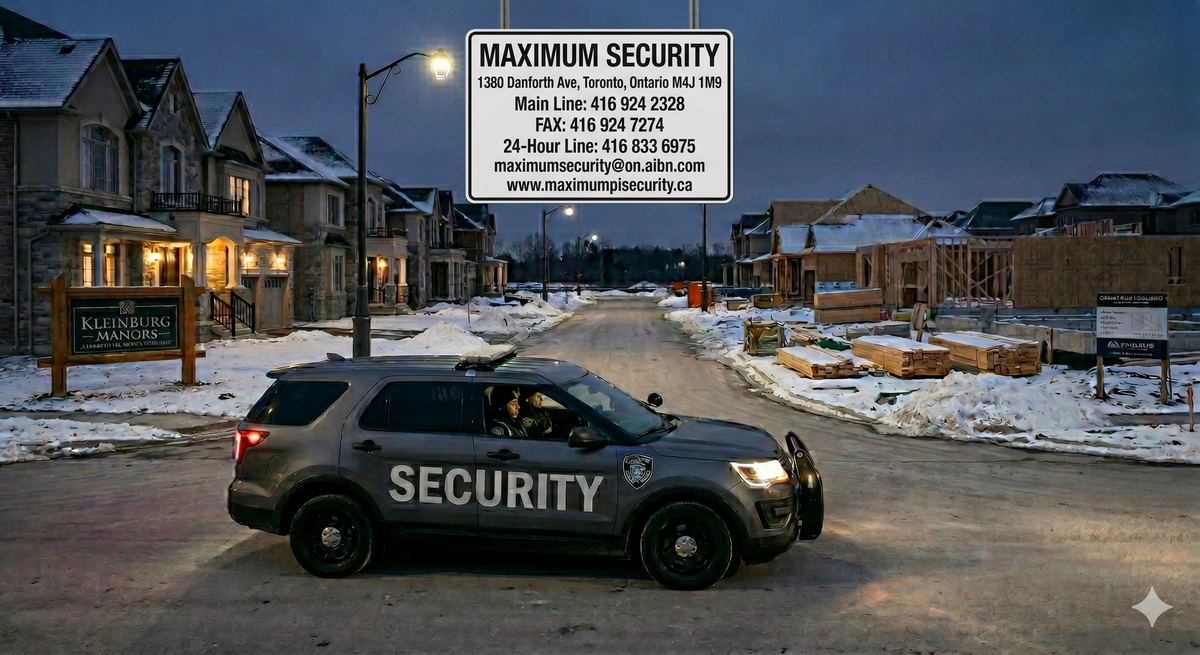
Managing multi-phase residential subdivisions, custom estate developments, or high-density condominium builds across Vaughan—spanning rapid low-rise expansions in Kleinburg, extensive framing blocks throughout Woodbridge, or high-rise infills near the Vaughan Metropolitan Centre (VMC)—presents project developers with high-stakes asset protection challenges. As structural framing lines advance along major thoroughfares like Weston Road or Major Mackenzie Drive, open perimeters naturally expand. This vast footprint exposes millions of dollars in uninstalled HVAC inventory, bundles of premium lumber, and heavy machinery to highly organized theft rings operating across York Region.
When establishing an overnight or weekend defense strategy for a large development tract, procurement officers routinely face a critical budgetary and operational dilemma: deploying dedicated live static guards or contracting randomized mobile vehicle patrols. Sourcing the wrong model can lead to either massive financial waste or catastrophic asset loss. Mitigating these risks requires analyzing real performance data, understanding actual 2026 Ontario commercial bill rates, and executing a site layout plan designed to withstand both criminal incursions and severe Canadian winter hazards.
Analyzing the Operational Strengths of Live Guards vs. Mobile Patrols
Every residential development phase has distinct vulnerabilities that dictate which protection asset is most effective. Choosing between a full-time, dedicated human presence and a shared vehicle patrol service requires a deep understanding of your site's physical layouts, material delivery schedules, and perimeter vulnerabilities.
Consensus Analysis: Continuous Static Presence vs. Shared Interval Auditing
Project supervisors often look for a universal solution to protect their entire development lifecycle. However, field metrics across Southern Ontario indicate that applying a single model to a shifting multi-phase project can cause significant gaps in your security perimeter.
The Verdict:
- Avoid This: Deploying expensive, 12-hour static guards to monitor completely vacant, raw excavation parcels or rough graded lots before any framing lumber or mechanical inventory has arrived on-site. This over-allocates precious budget dollars to low-risk development phases.
- Buy This: Contract randomized mobile patrols during the initial site clearing and underground utility phases to confirm fence line integrity and deter trespassers. Immediately transition to full-time, dedicated live static guards the moment your first framing package drops or when high-value copper rough-ins begin inside the building envelopes.
Deep Dive: Calculating the Financial Realities of Protection Frameworks
To optimize your loss prevention budget, procurement teams must evaluate security expenditures based on commercial agency bill rates rather than basic guard wages. In the 2026 Ontario market, a legitimate security agency must maintain extensive liability insurance, full compliance with the Workplace Safety and Insurance Board (WSIB), and active licensing under the Private Security and Investigative Services Act (PSISA).
A full-time live static guard provides a dedicated, continuous presence on your property for an entire 10-to-12-hour shift. This model gives you immediate, on-site response capabilities, real-time access control at your primary entry gates, and continuous monitoring of critical asset compounds. However, a dedicated live guard requires a significant budgetary commitment, with commercial agency bill rates for a Tier 1 static guard ranging between $38.00 and $48.00 per hour (CAD). For a standard multi-year residential subdivision build, maintaining a single overnight and weekend static guard can easily run between $14,000 and $18,000 per month in contracted services.
Conversely, randomized mobile security patrols offer a highly efficient, shared-cost alternative. Under this framework, a professional, fully equipped patrol officer in a marked vehicle visits your Vaughan site at completely unpredictable times throughout the night. The officer inspects perimeter gates, physically tests lock chains on storage containers, and checks for unauthorized vehicles. Because the cost of the vehicle, fuel, and patrol officer is shared across multiple commercial clients in the region, a Tier 3 mobile patrol service is billed at a flat rate of $45.00 to $75.00 per individual site check (CAD). If you schedule three thorough inspections per night, your monthly security cost drops to approximately $4,500 to $6,500—saving your project thousands of dollars in monthly overhead.
| Protection Model | Monthly Budget Outlay (CAD) | Primary Security Advantage | Primary Limitation |
| Dedicated Live Static Guard | $14,000 - $18,000 | Continuous 100% on-site presence; immediate intervention capability. | Higher budget impact; requires on-site shelter facilities. |
| Randomized Mobile Patrols | $4,500 - $6,500 | Shared-cost model; unpredictable arrival times disrupt theft planning. | Intermittent coverage; response times depend on traffic and proximity. |
To understand how these budgeting tiers integrate with broader regional safety compliance mandates across Southern Ontario, project management teams should review our comprehensive 2026 construction site security guidelines for GTA contractors to establish clear procurement baselines.
Engineering the Hybrid Subdivision Deployment Model
For sprawling residential communities under development in areas like Maple or Thornhill, the most effective strategy is often a hybrid approach that combines both static and mobile elements. This model optimizes your security budget while maintaining maximum protection across different risk zones.
1. Hardening the High-Value Compound with Static Protection
Every residential development site features a central "hot zone"—typically the main trailer compound, the tool-drop yard, and the primary delivery staging area where uninstalled appliances, copper wire reels, and heavy machinery components are held. This concentrated asset area should be enclosed within a reinforced, eight-foot fence line and guarded by a dedicated live static guard.
Stationing a guard continuously at this location ensures that all inbound delivery manifests are thoroughly verified, subcontractors are logged into the site management software, and high-value materials remain under constant surveillance. Contractors can further fortify these local tool storage areas by implementing the physical lock standards detailed in our tactical overview on preventing overnight tool theft on East York construction sites.
2. Sweeping Broad Perimeters with Mobile Patrol Assets
While your live static guard protects the high-value central compound, a randomized mobile patrol unit can be used to scan the wider perimeter of your subdivision. In multi-acre developments with dozens of homes in various stages of framing or drywalling, a single walking guard cannot effectively cover the entire layout.
A marked patrol vehicle can traverse miles of unpaved community roads in minutes. The patrol officer can easily check the remote boundaries of the site, scan for suspicious vehicles parked along dark side streets, and ensure that remote gates are locked tightly. If the mobile patrol officer discovers a perimeter breach or a group of trespassers, they can immediately coordinate with the on-site static guard or dispatch the York Regional Police (YRP) for rapid assistance. For projects facing recurring property damage or unauthorized site access during framing phases, combining these mobile patrols with the deterrent frameworks in our guide on dealing with vandalism at Scarborough commercial build sites ensures your broad perimeters remain highly defended.
Winter Security Logistics: Managing Vaughan Site Conditions
Sustaining a professional security operation during a severe Southern Ontario winter requires careful planning and robust infrastructure. When a heavy winter storm sweeps across Vaughan, bringing sub-zero temperatures down to -25°C and dumping heavy snow along open roads in Kleinburg, your choice of security model will directly impact your site's operational safety.
On-Site Infrastructure for Static Guards
If you deploy a live static guard for overnight coverage during the winter, you must provide a clean, insulated, and well-heated guard shack or office trailer. Expecting a guard to sit in a personal passenger vehicle for 12 hours with the engine idling is dangerous and highly ineffective. Idling vehicles face carbon monoxide risks, fogged windows that completely block visibility, and mechanical failures in extreme cold. A cold, uncomfortable guard is far more likely to lose alertness. Providing a professional, illuminated shelter ensures your on-site personnel remain warm, attentive, and capable of executing effective patrols through freezing conditions.
Vehicle Readiness for Mobile Patrol Units
Mobile patrol services are highly resilient during severe winter weather, provided the agency utilizes modern, four-wheel-drive utility vehicles equipped with terrain-rated winter tires and high-intensity exterior spotlights. A professional mobile patrol officer can navigate snow-drifted construction roads that would be impassable on foot, ensuring that remote structures and property lines receive consistent, documented checks even during active blizzards.
Furthermore, because mobile patrols are conducted from fully equipped company vehicles, officers can execute their rounds without facing exposure risks or drop-offs in performance due to extreme cold. For procurement teams looking to verify that their chosen agency meets all mandatory provincial licensing and liability standards before signing a contract, studying the regulatory blueprints in construction site security guard requirements in North York is an essential step.
If your active residential subdivision, custom estate build, or high-rise development in Vaughan requires immediate protection that stands up to severe local threats, establishing a professional line of defense is simple. Project managers can easily connect with proven local operators to request a custom security quote from Maximum PI Security to deploy high-visibility assets, secure primary tool yards, and eliminate liability vulnerabilities before they turn into costly project delays.
Compliance and Liability Management under the PSISA
Deploying any form of physical security on a Vaughan construction site requires strict adherence to Ontario provincial regulations to protect the primary contractor from severe civil liability and regulatory penalties. Under the Private Security and Investigative Services Act, every individual performing security, gate watch, or property patrol duties must hold an active Ontario Security Guard Licence.
Some builders attempt to save money by paying off-duty laborers cash to sit in a truck overnight. This practice introduces massive legal risks. Unlicensed workers lack the legal training required to manage trespassers properly under the Trespass to Property Act (TPA). If an unlicensed worker gets into a physical altercation with a material thief and sustains an injury, your commercial liability insurance provider will likely invalidate your entire policy due to a breach of risk warranties. Your business will face immediate workplace safety investigations, heavy provincial fines, and potentially devastating civil lawsuits. Always verify that your security provider is fully licensed and carries comprehensive commercial liability insurance before any guard signs into your site logbook.
Nitty-Gritty Subdivision Security Realities
How do we prevent mobile patrol officers from simply driving past the main gate without actually checking the site?
This is a common concern for project managers using mobile patrol services. To guarantee that patrol officers are executing thorough inspections rather than just driving by, professional security agencies install digital guard tour checkpoint systems across your property. Weatherproof RFID tags or unique QR codes are permanently installed at critical locations, such as tool vaults, electrical hubs, and remote gates. The patrol officer must exit their vehicle, walk to each station, and scan the tag using a GPS-tracked mobile application. This generates an unalterable, time-stamped digital report that is emailed directly to the project superintendent every morning, providing verifiable proof of coverage.
What happens if a mobile patrol officer discovers an active copper theft in progress?
If a mobile patrol officer arrives at your Vaughan site and encounters an active theft ring cutting copper wire or loading materials, their strict protocol is to avoid direct physical confrontation. Organized cargo and copper thieves frequently carry dangerous tools and weapons and will escalate to violence if cornered. The patrol officer will immediately retreat to a safe distance, block the primary exit gate with their patrol vehicle if safe to do so, and instantly dial 911 to dispatch the York Regional Police. While waiting for law enforcement to arrive, the officer will document the suspects' descriptions, vehicle license plates, and exact movements using their vehicle's integrated dashcam and mobile reporting tools.
Are mobile patrol vehicles legally permitted to use flashing amber lights on public roads?
Yes. Under the Ontario Highway Traffic Act, private security vehicles executing mobile patrol and alarm response duties are legally permitted to operate amber-colored flashing warning lights while on private property or when parked safely along public roadways adjacent to a client's site. These flashing lights serve as a powerful visual deterrent, alerting local residents and passing police units that a professional security officer is actively auditing the property.
Frequently Asked Questions
How many mobile patrol checks should I schedule for my residential build site each night?
For a standard, medium-sized residential development, scheduling three to four randomized mobile checks per night is the industry best practice. This configuration ensures that your site is audited approximately every two to three hours throughout the high-risk window between 8:00 PM and 6:00 AM, making it exceptionally difficult for local theft operations to predict or plan a successful breach.
Do mobile patrol officers have the legal authority to ticket or tow unauthorized vehicles parked on-site?
Yes. If your Vaughan development has proper municipal signage displayed at the primary entry gates, a licensed security guard acting as an authorized agent of the property owner can issue private property parking tickets or coordinate with licensed local towing services to remove unauthorized vehicles from your fire routes, delivery zones, or construction staging areas.
What should we do with our heavy machinery keys overnight to prevent unauthorized operation?
To prevent thieves or vandals from operating your heavy equipment, all machinery keys must be removed from ignitions at the end of every shift and stored in a centralized, high-security lockbox inside the main trailer compound. For high-value assets like heavy excavators or front loaders, site supers should also engage master battery disconnect switches or install physical steering wheel and ignition locks to completely neutralize hotwiring attempts.
About the Author
Jeff Calixte is an online exclusive content sell strategist with a deep background in tracking local asset protection data, analyzing Southern Ontario labor rates, and outlining real operational deployment structures across the Greater Toronto Area.
Sources
- Ontario Ministry of the Solicitor General - Private Security and Investigative Services Act Regulations
- Trespass to Property Act, R.S.O. 1990, c. T.21
- Ontario Highway Traffic Act, R.S.O. 1990, c. H.8 - Warning Light Regulations
Note
Commercial bill rates, guard wages, deployment conditions, and vendor availability can vary widely by province, municipality, season, and project scope. All pricing estimates, labor figures, and career examples in this guide are approximations based on current Ontario market data. Always confirm contract details, licensing compliance, and specific rate quotes directly with your chosen service provider or employer before finalizing any agreements.