Condominium Concierge Security Management: The GTA Board Guide
Managing a condominium concierge team in the Greater Toronto Area requires balancing luxury hospitality with rigid physical security. Discover the ultimate guide for condo boards to optimize concierge operations, eliminate property liabilities, and enforce residential bylaws effectively.
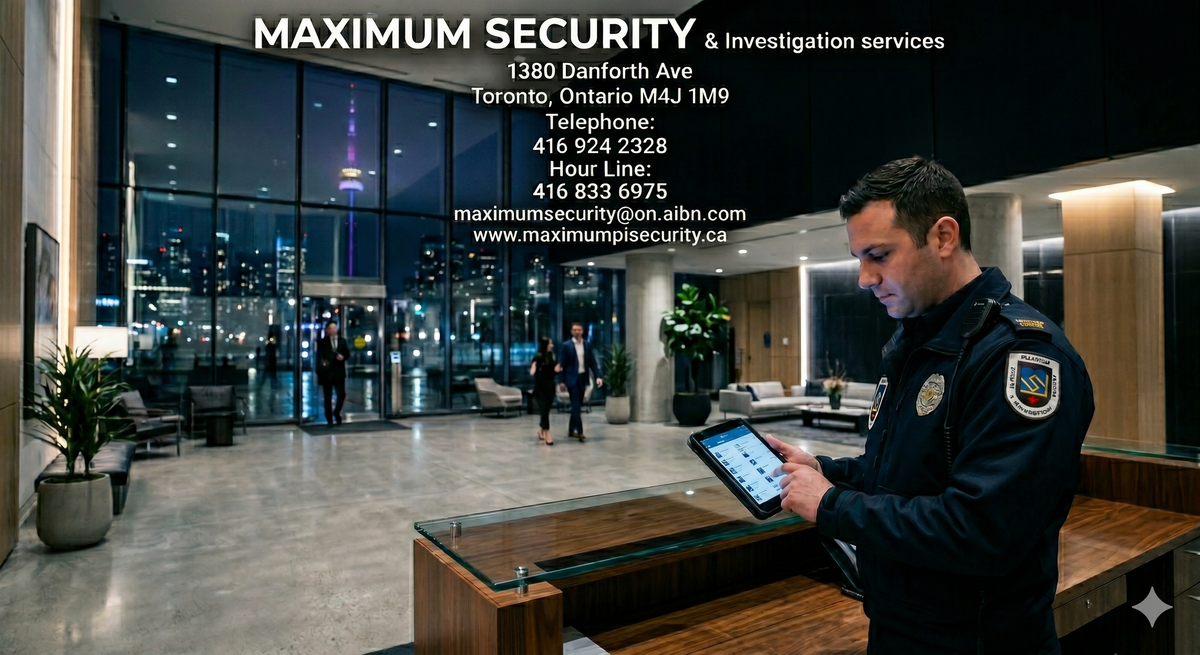
For condominium boards and property management groups operating across the Greater Toronto Area—from the densely populated high-rises of downtown Toronto to the sprawling residential communities in Mississauga, Vaughan, and Markham—the front desk concierge represents the absolute heartbeat of the building. The concierge is the first face a resident sees when they come home, the primary contact for late-night emergency maintenance, and the absolute first line of defense against unauthorized entry, property theft, and community disturbances. However, a massive operational disconnect frequently plagues condo boards: they treat their concierge team exclusively as hospitality staff, entirely ignoring the intense, high-risk security mandate that the role demands.
In the modern GTA real estate landscape, a condominium concierge cannot simply be a friendly face handing out packages. They must be highly trained, PSISA-licensed security professionals capable of executing rigid access control, enforcing strict condominium bylaws, intercepting organized property thieves "tailgating" into the garage, and de-escalating aggressive interactions with short-term rental guests. Failing to equip your front desk staff with clear, legally compliant security directives leaves the condo corporation exposed to devastating civil liabilities, massive insurance premium hikes, and rapidly declining property values. This definitive board guide outlines the exact management frameworks, operational protocols, and commercial procurement strategies required to transform your condominium concierge from a passive greeter into an impenetrable asset protection team.
Answer Target: What is Condominium Concierge Security Management?
Condominium concierge security management is the strategic oversight, training, and deployment of licensed front-desk personnel in a residential building to balance premium hospitality with strict physical access control. Effective concierge management requires condo boards to establish rigid standard operating procedures (SOPs) for visitor verification, package logistics, and emergency response, ensuring the staff can actively prevent property theft, enforce community bylaws, and protect residents without compromising the luxury experience of the residential community.
The Dual Mandate: Hospitality vs. Hard Security
The fundamental challenge of condominium concierge management is navigating the friction between hospitality and security. Residents pay substantial monthly maintenance fees and expect a "white-glove" luxury experience. They want the concierge to know their name, hold the door, and accept their grocery deliveries. However, this desire for convenience frequently clashes directly with the necessity for strict security protocols.
Consensus Analysis: The "Friendly" Concierge vs. The Secure Perimeter
When a condo board receives complaints from residents about the front desk, it usually stems from a failure to balance these two mandates.
The Verdict:
- Avoid This: Instructing your concierge company that "customer service is the only priority." When a concierge is terrified of offending a resident, security collapses entirely. A purely hospitality-driven concierge will buzz in unverified food delivery drivers because they don't want to make the resident come downstairs. They will allow unknown individuals to bypass the key fob scanner if the person smiles and claims they "forgot their keys." This exact operational weakness is how organized bicycle thieves and domestic abusers gain effortless, unchallenged access to secure residential floors.
- Buy This: Implement a "Security-First Hospitality" framework. The condo board must draft explicit, non-negotiable post orders that remove the burden of choice from the concierge. If the rule is that every single guest must be physically signed in and verified via phone call to the resident, the concierge must enforce it universally—even if the resident gets annoyed. True luxury is not just convenience; true luxury is knowing that your family is sleeping in a building that is completely impenetrable to unauthorized actors.
The Financial Devastation of Poor Concierge Management
The economic impact of a poorly managed concierge desk cascades rapidly through the entire condominium corporation. If the front desk is weak, property criminals will share that intelligence, and your building will become a targeted hotspot for storage locker break-ins and underground garage vehicle thefts.
When theft spikes, residents will demand that the condo board file claims against the corporation's commercial insurance policy. Due to the high volume of claims in the GTA, your insurance provider will dramatically increase your annual premiums or mandate a massive hike in your deductibles. These increased operational costs are passed directly back to the unit owners in the form of elevated monthly maintenance fees. When maintenance fees skyrocket and the building develops a reputation for being unsafe, the resale value of every single unit in the tower plummets.
| Operational Failure | Unmanaged/Weak Concierge Desk | Fortified Security-First Concierge |
| Storage Locker / Bicycle Theft | $15,000 - $40,000 (CAD in resident losses) | $0.00 (Tailgaters Intercepted) |
| Short-Term Rental Vandalism | $5,000 - $12,000 (CAD in amenity damage) | $0.00 (Strict Access Enforcement) |
| Condo Corporation Insurance Hikes | 15% - 30% Premium Escalation | $0.00 (Maintained Clean Loss Run) |
| Property Value Depreciation | Stagnant or falling unit resale values | Maintained Premium Market Value |
By establishing a rigid, highly trained concierge security framework, condo boards protect the physical safety of their residents while simultaneously safeguarding the long-term financial health of the real estate asset. For property managers looking to understand how to supplement their concierge desk with exterior security, reviewing our guide on mobile patrol security for residential condominiums in Toronto is an essential next step.
Deep Dive: Designing an Ironclad Condominium Concierge Protocol
To transform a front desk into a highly effective security apparatus, condo boards and property managers must strip away ambiguity. A concierge guard cannot be expected to guess how the board wants them to handle a crisis at 2:00 AM. They require a comprehensive, site-specific manual of Standard Operating Procedures (SOPs). This deep dive outlines the critical operational pillars that must be meticulously defined, enforced, and audited to guarantee a secure residential environment.
1. Absolute Access Control and Visitor Verification
The single most important duty of the concierge is determining exactly who is allowed past the lobby doors. The front desk acts as the primary physical firewall for the entire vertical neighborhood.
The Pre-Authorization Protocol: Condominium boards must mandate a strict pre-authorization system. Residents must be required to notify the concierge in advance—either via a community smartphone application, an email, or a direct phone call—when they are expecting a guest, a contractor, or a dog walker. When the visitor arrives, the concierge must verify their government-issued identification against the resident's pre-authorization log.
The "No-Exception" Contact Rule: If an unannounced visitor arrives, the concierge must never grant access based on the visitor's word. The concierge must utilize the internal intercom system or call the resident's registered phone number to receive explicit verbal authorization. If the resident does not answer the phone, the visitor is denied entry and asked to wait outside the secured vestibule. Condo boards must back their concierge staff entirely when residents complain about this friction; the board must communicate clearly to the community that this rule exists to prevent violent domestic disputes, stalkers, and thieves from accessing the residential floors.
Managing Food and Parcel Delivery: The explosion of app-based food delivery and e-commerce has turned condo lobbies into logistical nightmares. To maintain security, food delivery drivers must never be allowed to freely roam the residential hallways. The board must enforce a policy where all food deliveries are left at a designated table in the lobby, and the resident must come down to retrieve them. For high-value parcels, the concierge must utilize a secure digital logging system, scanning packages into a secure backroom, requiring the resident to provide a signature and identification upon pickup.
2. Short-Term Rental Interdiction and Amenity Enforcement
The proliferation of short-term rentals (like Airbnb or VRBO) introduces massive security and liability threats to residential condominiums. Even if the condo corporation has strict bylaws prohibiting short-term rentals, unit owners frequently ignore the rules, resulting in unauthorized individuals treating the building like a hotel, throwing destructive parties, and monopolizing shared amenities.
Identifying the "Ghost" Hotelier: The concierge is the primary weapon in enforcing short-term rental bans. Because they are stationed in the lobby, they observe the daily traffic patterns. Board SOPs must instruct the concierge to actively look for specific indicators: individuals arriving with heavy luggage who do not know how to operate the intercom, people asking for directions to the elevators, or "guests" attempting to retrieve keys from a hidden lockbox on a nearby fence.
The Interception and Documentation Process: When a concierge identifies a suspected short-term renter, their duty is not to physically fight the individual, but to execute immediate administrative interdiction. The concierge must politely intercept the individual, ask for the name of the resident they are visiting, and request to see the host. When the individual inevitably fails the verification process, the concierge must formally deny them access to the building under the Trespass to Property Act. Crucially, the concierge must document the exact unit number involved, the time of the incident, and a description of the individuals in their daily shift report. This provides the condo board and the property manager with the exact, timestamped legal evidence required to issue massive corporate fines and legal warning letters to the offending unit owner.
3. Key Control and Mechanical Master Management
A high-rise condominium operates on a complex system of master keys, electronic fobs, and restricted access zones (such as elevator control rooms, main electrical vaults, and rooftop mechanical penthouses). If a master key is lost, copied, or handed to an unauthorized contractor, the security of the entire building is catastrophically compromised.
The Tamper-Proof Key Matrix: The concierge desk must feature a heavy, bolted key-retention vault. Every single building key must be attached to a heavy-duty, tamper-evident brass ring or an electronic tracking peg. When a specialized contractor (such as an elevator mechanic or a plumber) arrives, the concierge must verify their corporate work order, record their driver's license details into the digital logbook, and issue the key. The concierge must enforce a strict "same-day return" policy. If a contractor attempts to leave the property without returning the mechanical room key, the concierge must immediately escalate the situation to the property manager and the security agency supervisor.
4. Health and Safety Compliance (OHSA and WHMIS)
Condominium boards frequently forget that the concierge is not just a greeter; under Ontario law, they are a worker operating within a commercial facility, and the board has a legal duty to maintain a safe environment.
Safety Data Sheets (SDS) and Hazard Communication: The concierge desk frequently acts as the central hub for the building's emergency documentation. The board must ensure that the concierge has immediate access to the "Safety Station" binder, which contains the Workplace Hazardous Materials Information System (WHMIS) data sheets for every chemical used by the cleaning and maintenance staff. If an emergency occurs—such as a cleaner spilling industrial solvent in the lobby—the concierge must instantly reference the SDS to coordinate the correct emergency medical response or hazardous material cleanup protocol.
Managing Aggressive Residents and Workplace Violence: The concierge is the focal point for resident frustration. When the elevators break down, the hot water is shut off, or a vehicle is scratched in the garage, the residents immediately direct their anger at the front desk. Under the Occupational Health and Safety Act, the condo board must have a formal Workplace Violence and Harassment policy. The concierge must be explicitly trained in verbal de-escalation, and they must be empowered to immediately call the police and file a formal incident report if a resident becomes verbally abusive, physically threatening, or attempts to throw objects at the desk. The board must stand behind the concierge and issue formal legal warnings to abusive residents to maintain a safe working environment.
5. Fire Code Protocols and Emergency Escalation
In a high-rise vertical neighborhood, a fire emergency is a mass-casualty threat. The concierge is the central command node during the critical first ten minutes of a catastrophic emergency.
The Fire Panel and Annunciator Operations: The concierge must be intimately trained on the operation of the building's central fire alarm control panel (FACP) and the voice communication system. If a smoke detector triggers on the 35th floor, the concierge must not panic. They must immediately silence the annoying localized buzzer at the desk (without resetting the actual building alarm), read the exact zone that triggered the alert, and dispatch the secondary roving security guard to visually investigate the floor.
Elevator Homing and Emergency Services Handoff: If a legitimate fire is confirmed, the concierge executes their emergency mandate. They utilize the fire panel to recall all elevators to the ground floor (preventing residents from entering a smoke-filled elevator shaft), ensure the front automatic sliding doors are locked in the open position for rapid evacuation, and print the building's Resident Mobility Assistance list (a document detailing which residents require physical help evacuating, such as the elderly or wheelchair users). When the local fire department arrives, the concierge immediately hands over the master fire keys, the mobility list, and the exact location of the triggered alarm, saving firefighters critical minutes that save lives.
Commercial Procurement: Sourcing Verified Concierge Services in the GTA
Acquiring a highly trained, professional concierge security team requires a realistic understanding of commercial agency pricing structures across Toronto, Peel, and York Regions. Condominium boards cannot base their annual budgets on minimum-wage expectations. To field a concierge who is articulate, sharply dressed, trained in de-escalation, and capable of managing complex fire panels, a legitimate security agency must recruit premium talent.
In the Ontario market, compliant security agencies price these premium contracts to cover extensive corporate overhead, including multi-million-dollar commercial general liability insurance, comprehensive WSIB clearings, and ongoing customer service and tactical training.
For residential condominiums, luxury towers, and sprawling gated communities across the GTA, condo boards should budget for the following agency bill rates:
- Standard Residential Concierge Guard (Tier 1): Billed at $32.00 to $42.00 per hour (CAD). This involves a highly polished, customer-service-oriented guard deployed to manage the front desk, execute strict access control, handle basic package logistics, and enforce noise bylaws during the overnight shifts.
- Elite Condominium Security Supervisor (Tier 2): Billed at $38.00 to $48.00 per hour (CAD). This role is essential for massive, multi-tower complexes. This individual acts as the site supervisor, managing the scheduling of the other guards, executing complex administrative audits of the key matrix, and handling severe resident escalations or aggressive trespassers.
- Secondary Roving/Mobile Floor Guard: Billed at $30.00 to $38.00 per hour (CAD). Large buildings cannot rely on the lobby desk alone. A secondary guard is deployed to continuously walk the residential hallways, execute random sweeps of the underground parking garage to prevent auto theft, and audit the rooftop amenities while the concierge remains anchored to the front doors.
Hiring an organization that quotes rates significantly below these commercial baselines—such as $22.00 per hour—is a direct indication that the provider is utilizing untrained, unlicensed, or unmotivated personnel. If you hire a cut-rate security company, your concierge will likely fall asleep at the desk, allow thieves to bypass the front doors, and respond to resident emergencies with total apathy, destroying the value and safety of your community. To understand how to properly vet B2B vendors and structure comprehensive safety frameworks, reviewing our guide on alarm response security services for small businesses in Oakville provides excellent insights into managing rapid-response protocols.
Legal Realities: PIPEDA, Privacy, and Resident Data
The concierge desk is a massive repository of highly sensitive personal information. They possess lists of resident names, unit numbers, phone numbers, vacation schedules, and vehicle license plates. Handling this data requires absolute compliance with the Personal Information Protection and Electronic Documents Act (PIPEDA).
Condo boards must establish explicit rules prohibiting the concierge from sharing resident information. If an individual walks up to the desk and asks, "Does John Smith live in unit 405?", the concierge must absolutely refuse to confirm or deny the information. They must politely state that building policy prohibits the release of resident directories.
Furthermore, the concierge must never leave visitor logbooks or package delivery manifests open and visible on the front counter where anyone can read them. All digital databases and physical logbooks must be strictly secured. A breach of resident privacy—such as a concierge inadvertently confirming to a domestic stalker that their victim is currently inside the building—can result in devastating physical harm and massive, multi-million dollar corporate negligence lawsuits against the condominium board.
Nitty-Gritty Concierge Security Realities
Can a concierge physically stop a resident from bringing a banned pet into the building?
No. Under Canadian law, a security guard cannot physically lay hands on a resident or their property over a bylaw infraction. If the condominium rules prohibit dogs over 30 pounds, and a resident walks through the lobby with a massive mastiff, the concierge will not physically wrestle the dog. The protocol is strict, objective documentation. The concierge will take a clear note of the time, the date, and the unit number of the resident, and file an immediate incident report. The condo board and the property manager will then utilize this documented evidence to issue a formal, legally binding warning letter and levy heavy corporate fines against the unit owner for breaching the condominium declaration.
What should the concierge do if the police arrive demanding to search a resident's unit?
A concierge must balance cooperation with law enforcement against the legal rights of the residents. If police officers arrive, the concierge must respectfully ask to see their badges and note their badge numbers. If the police do not have a formal search warrant, the concierge cannot simply hand over the master key to a resident's unit; doing so violates the resident's constitutional rights and exposes the condo corporation to a massive lawsuit. The concierge will allow the police to travel to the residential floor to knock on the door themselves. However, if the police state they are responding to an active, life-threatening emergency (exigent circumstances), the concierge will immediately provide full access and document the entire interaction in the daily shift log.
How do we stop residents from verbally abusing the concierge staff?
Condominium boards must take a zero-tolerance stance on resident abuse to maintain a high-quality concierge team. The board must draft a clear "Code of Conduct" that is distributed to every single unit owner. If a resident screams at the concierge over a lost package or a broken elevator, the concierge is instructed to issue one polite warning, disengage, and immediately write a detailed incident report. The board must instantly follow up by sending a formal legal letter to the abusive resident from the corporation's legal counsel, warning them that further harassment will result in legal action and direct fines. Protecting your staff is the only way to retain excellent security talent.
Frequently Asked Questions
Should our condo board hire proprietary "in-house" concierges or outsource to a security agency?
Outsourcing to a fully licensed, third-party security agency is universally superior for liability and management reasons. When you hire an agency, they handle all the massive overhead: WSIB compliance, PSISA licensing, rigorous background checks, uniform procurement, and sick-day shift replacements. If a guard performs poorly, you simply call the agency and demand a replacement. If you hire in-house staff, your condo corporation assumes all employment liabilities, human rights complaints, and the immense burden of attempting to staff the desk 24/7/365.
Do concierge guards need to know CPR and First Aid?
Yes. Reputable commercial security agencies mandate that every single deployed guard holds a valid, up-to-date Standard First Aid and CPR/AED certification. Because the concierge is stationed in the main lobby, they are frequently the very first responder on the scene if a resident suffers a heart attack in the fitness center or a contractor collapses in the parking garage. The concierge's ability to deploy an AED and initiate CPR while waiting for paramedics is a massive, life-saving asset for the community.
Can the concierge accept and sign for registered legal mail or cannabis deliveries?
Generally, no. Condominium boards should establish strict policies prohibiting the concierge from signing for highly sensitive materials. Signing for registered legal documents (like court summons or eviction notices) on behalf of a resident creates massive legal complications regarding the "proof of service." Similarly, signing for age-restricted deliveries like alcohol or cannabis places the concierge in a position of liability regarding age verification. The concierge should direct the delivery agent to contact the resident directly to come to the lobby and sign for these specific items themselves.
About the Author
Jeff Calixte is an online exclusive content sell strategist with a deep background in tracking local asset protection data, analyzing Southern Ontario labor rates, and outlining real operational deployment structures across the Greater Toronto Area.
Sources
- Condominium Act, 1998, S.O. 1998, c. 19
- Ontario Ministry of the Solicitor General - Private Security and Investigative Services Act Regulations
- Condominium Authority of Ontario - Security and Concierge Guidelines
Note
Commercial bill rates, guard wages, deployment conditions, and vendor availability can vary widely by province, municipality, season, and project scope. All pricing estimates, labor figures, and career examples in this guide are approximations based on current Ontario market data. Always confirm contract details, licensing compliance, and specific rate quotes directly with your chosen service provider or employer before finalizing any agreements.