Random Mobile Guard Checks for Corporate Buildings in Vaughan
Corporate office complexes across Vaughan face escalating after-hours property crime and trespassing. Discover how random mobile guard checks offer property managers a highly effective, affordable alternative to full-time static security.
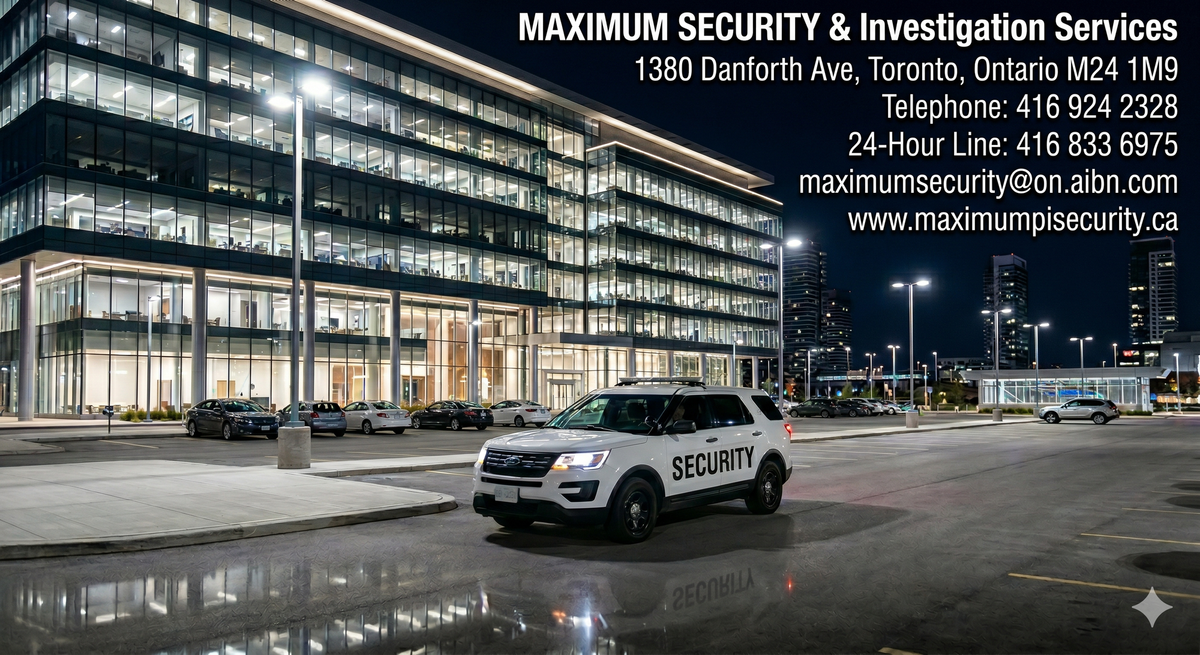
Managing a commercial office building, corporate campus, or multi-tenant professional complex across Vaughan—whether located in the rapidly expanding Vaughan Metropolitan Centre (VMC) near Highway 7 and Jane Street, the dense commercial pockets of Concord, or the sprawling Vaughan Enterprise Zone (VEZ) near Highway 50—presents corporate property managers with a highly specific set of after-hours challenges. During daytime business hours, these premium office parks are bustling with corporate employees, client meetings, and active building concierge staff. However, when the primary workforce exits at 6:00 PM, the operational dynamic of these sprawling properties completely shifts.
Expansive surface parking lots, deep underground parking garages, rear shipping and receiving docks, and recessed glass vestibules become entirely deserted. This massive reduction in human traffic transforms Vaughan corporate buildings into highly attractive targets for aggressive late-night trespassing, organized property theft, copper wire stripping, and severe commercial vandalism. Relying solely on passive interior alarms and basic exterior surveillance cameras leaves your corporate perimeter completely exposed to rapid breach attempts. While deploying a dedicated, 24/7 static security guard provides comprehensive coverage, the corporate overhead required to maintain full-time personnel across a multi-building office park is often entirely unfeasible for property management budgets.
To bridge this massive gap between zero after-hours protection and expensive full-time static guarding, commercial real estate groups in Vaughan are pivoting toward randomized mobile security patrols. Deploying unpredicted, heavily documented mobile guard checks allows property managers to secure their massive building perimeters, verify points of entry, and maintain a highly visible physical deterrent at a fraction of the cost of a permanent guard.
The Operational Reality of Vaughan's Corporate Corridors
Vaughan is one of the fastest-growing commercial and industrial hubs in the Greater Toronto Area. The massive influx of new commercial real estate, especially around the VMC mobility hub and the Pine Valley Business Park, has created immense opportunities for corporate tenants. Unfortunately, this rapid expansion also attracts organized property crime networks looking to exploit properties that lack active, physical after-hours monitoring.
Consensus Analysis: Static Concierge vs. Randomized Mobile Checks
When corporate property managers evaluate their annual security budgets, they must frequently decide between retaining a full-time overnight lobby guard or transitioning to an exterior mobile patrol model.
The Verdict:
- Avoid This: Relying on a single static guard sitting behind a lobby desk in a massive, multi-building corporate park. While a lobby guard is excellent for daytime access control, they offer virtually zero exterior deterrence at night. Organized property thieves do not walk through the front glass doors; they target the unmonitored rear shipping docks, the dark corners of the underground parking garage, and the exterior electrical utility boxes. If your guard is trapped behind a desk, the exterior of your building is completely vulnerable.
- Buy This: Implement a dedicated, randomized mobile guard check protocol. A marked security vehicle possesses the mobility to rapidly cover massive corporate acreage. The mobile patrol officer executes completely unpredictable sweeps of the entire exterior perimeter, illuminating rear loading docks, checking underground garage levels, and verifying exterior hardware. This high-visibility, dynamic movement forces criminal scout teams to abandon the target, as they cannot predict when the patrol vehicle will arrive to interrupt their activities.
Deep Dive: Calculating the True Cost of Corporate Property Breaches
The financial fallout of a late-night perimeter breach at a Vaughan corporate complex extends far past the direct cost of a shattered lobby window. Corporate tenants—ranging from national logistics headquarters to massive accounting firms—store highly sensitive physical data, expensive IT infrastructure, and premium office equipment on-site.
If a thief breaches a rear utility door, gains access to the building core, and strips high-value server components or causes severe structural damage to the corporate suites, the property management group faces catastrophic liability. Furthermore, corporate tenants pay premium leasing rates per square foot precisely because they expect a secure, professional environment. If a major tenant arrives on Monday morning to find individuals sleeping in the front vestibule or discovers their employee parking lot has been targeted by catalytic converter thieves, they will immediately cite a breach of lease terms regarding property safety. Replacing a flagship corporate tenant in Vaughan can cost the property management group hundreds of thousands of dollars in lost rent and tenant improvement allowances.
| Corporate Loss Component | Unsecured Vaughan Office Park | Fortified Mobile Check Layout |
| Emergency Vandalism/Glass Remediation | $3,500 - $8,500 (CAD) | $0.00 (No Vandalism Sustained) |
| Catalytic Converter / Fleet Theft | $5,000 - $15,000 (CAD) | $0.00 (Parking Lots Secured) |
| Corporate Tenant Lease Turnover Risk | Severe structural revenue threat | $0.00 (Stable, Secure Tenancy) |
| Commercial Liability Insurance Deductibles | $10,000+ per incident | $0.00 (Maintained Clean Record) |
| Total Estimated Financial Impact | $28,500+ (CAD) | $0.00 |
By deploying a professional mobile security presence, property managers transform their massive, vulnerable acreage into a tightly audited, highly secure corporate campus. This operational investment is mathematically superior to absorbing the devastating, compounding losses generated by an unprotected commercial perimeter. Facility directors looking to understand how these exterior security principles scale across different environments should review our foundational manual on commercial building security inspections and mobile patrol checklists to verify baseline risk management workflows.
Engineering an Ironclad Corporate Patrol Strategy
Eliminating property crime and aggressive trespassing in Vaughan's corporate sectors requires a strategic, procedural layout that aggressively targets the exterior boundaries of the property while supporting interior alarm systems.
1. High-Visibility Perimeter and Garage Sweeps
The most critical component of an after-hours property check is the high-intensity vehicle sweep. The mobile patrol officer does not simply drive past the front of the corporate building; they execute a deliberate, tactical route around the entire physical perimeter.
Operating a marked security vehicle equipped with roof-mounted amber warning lights and heavy-duty directional spotlights, the officer aggressively illuminates the dark spaces between parked vehicles, deep shipping bays, and remote landscaping buffers. For corporate complexes with underground parking garages—a common feature in the dense VMC district—the officer physically drives through every subterranean level. Underground garages are notorious hotspots for vehicle break-ins, illicit loitering, and vandalism. The overwhelming visual dominance of a flashing security vehicle immediately flushes out trespassers and neutralizes their primary operational advantage: darkness.
2. Manual Verification of High-Risk Access Points
Visual confirmation from inside a patrol vehicle is never sufficient for securing a premium corporate property. The patrol officer must physically exit the vehicle to conduct manual "door pull" tests on critical infrastructure.
The officer walks up to every ground-level access door, rear fire stairwell exit, and overhead shipping bay to manually verify that the heavy deadbolts, mag-locks, and exterior padlocks are fully engaged. In multi-tenant buildings, employees frequently prop open rear doors for smoke breaks and forget to close them before going home, completely bypassing the building's million-dollar electronic access control system. The mobile officer acts as the critical human failsafe, discovering these unsecured doors, locking them, and logging the breach for the property manager to address with the tenant the following morning.
3. Alarm Response and Corporate Keyholding
When you contract a mobile guard service for randomized checks, the agency typically becomes the primary authorized keyholder for the corporate building. This creates a massive secondary benefit: dedicated, rapid alarm response.
If the corporate building's interior burglar alarm, fire panel, or mechanical systems trigger at 3:00 AM, the central monitoring station does not wake up the property manager or call York Regional Police (who severely deprioritize unverified commercial property alarms). Instead, the monitoring station directly dispatches the contracted mobile patrol officer. The officer, already patrolling the Vaughan area, arrives rapidly, accesses the building using securely retained master keys, executes a full tactical sweep of the interior to verify the cause of the alarm, and resets the system. If a legitimate break-in or a burst commercial plumbing pipe is discovered, the officer instantly secures the perimeter and coordinates directly with emergency services.
Commercial Procurement: Sourcing Guarding in Vaughan
Acquiring professional mobile patrol coverage for a corporate office complex requires a realistic understanding of commercial agency pricing structures across York Region. Corporate real estate directors cannot evaluate security proposals based on basic minimum-wage expectations. A legitimate, compliant security agency must operate under the strict guidelines of the Private Security and Investigative Services Act (PSISA), pricing contracts to cover massive corporate infrastructure, including multi-million-dollar commercial general liability insurance, comprehensive WSIB clearings, and the heavy fuel and maintenance costs associated with running a 24/7 patrol fleet.
For active corporate office buildings, commercial parks, and business centers across Vaughan, procurement teams should budget for the following agency bill rates:
- Standard Exterior Mobile Patrol Check: Billed at $45.00 to $65.00 per individual site visit (CAD). This involves a thorough, documented sweep of the exterior surface parking lots, underground garages, high-intensity illumination of all loading docks, physical door pulls on perimeter access points, and a detailed digital timestamp report.
- Comprehensive Interior/Exterior Corporate Audit: Billed at $60.00 to $85.00 per individual site visit (CAD). This involves the officer utilizing retained grand-master keys to enter the corporate lobby, execute a full interior sweep of the main concourses, check remote electrical rooms, verify fire panels, and lock down the exterior glass vestibules.
- Dedicated Alarm Response Call-Out: Billed at $65.00 to $95.00 per incident (CAD). This is a rapid emergency dispatch triggered by the corporate building alarm in the middle of the night, ensuring a trained professional arrives to verify the threat and coordinate with local authorities.
Hiring an organization that quotes rates significantly below these commercial baselines—such as offering a corporate patrol check for $20.00—is a direct indication that the provider is cutting critical compliance corners. If you hire a cut-rate, unverified security company and their patrol driver causes an accident in your corporate parking garage or fails to carry proper commercial liability insurance, your real estate group will bear 100% of the devastating legal liability. To understand how to properly vet B2B vendors, reviewing our corporate guide on hiring uniformed security guards for retail plazas in Brampton is an essential step for any operations director.
If your Vaughan corporate building, commercial campus, or heavy-duty logistics hub requires an unyielding line of defense to eliminate after-hours property crime, establishing professional protection is straightforward. Facility directors can easily connect with verified B2B vendors to request a custom security quote from Maximum PI Security to deploy certified mobile personnel, secure massive parking structures, and protect valuable commercial assets against organized overnight threats.
Legal Compliance and the Trespass to Property Act
Deploying a professional mobile patrol service provides massive legal liability protection and directly satisfies the strict requirements of commercial property insurance underwriters. Guards executing mobile checks operate under the direct authority of the Ontario Trespass to Property Act (TPA).
This provincial legislation gives your contracted patrol officer the explicit legal power to approach individuals loitering in your corporate vestibules, sleeping in the underground garage, or idling in the surface parking lots after hours. The officer has the full legal authority to demand they leave the premises immediately if they are not conducting legitimate corporate business, and to formally ban repeat offenders from ever re-entering the property. Enforcing the TPA effectively removes problematic individuals—such as aggressive panhandlers, organized theft scouts, or disruptive loiterers—from your corporate campus before they ever have the opportunity to commit a break-and-enter or vandalize a tenant's vehicle.
Furthermore, many modern commercial insurance policies contain strict "Protective Safeguard Endorsements" or "Vacancy Clauses." These highly specific legal clauses dictate that if a massive corporate building is left unoccupied after hours, the property must be physically inspected by a licensed professional at regular intervals, or the alarm system must be tied to a verified private guard response service. By utilizing a licensed security agency equipped with digital scanning technology and timestamped GPS reporting, the property manager possesses absolute, undeniable proof of compliance to hand directly to insurance auditors in the event of a claim. For operations evaluating similar exterior compliance protocols, exploring after-hours commercial property patrols in Scarborough provides excellent operational context.
Nitty-Gritty Corporate Patrol Realities
How do I know the patrol officer actually checked the rear fire doors of my building?
Elite commercial security agencies eliminate "ghost patrols" entirely by utilizing advanced digital reporting software. The agency will install weatherproof Near Field Communication (NFC) checkpoints or QR code tags at critical, remote locations across your massive property—such as the furthest rear fire exit, the main electrical utility box, and deep inside the underground parking garage. During their patrol, the officer is forced to exit their vehicle, walk to the remote tag, and physically scan it with a GPS-tracked smartphone. This generates an unalterable digital timestamp proving they physically walked the entire property, which is emailed to you every morning.
Can a mobile guard physically force a loiterer out of the corporate lobby at 3:00 AM?
While the Trespass to Property Act gives the officer the authority to direct individuals to leave private property, professional security agencies strictly limit physical "hands-on" removals due to massive civil liability and physical danger. The standard protocol is for the officer to maintain a safe distance and issue a clear, verbal trespass warning. If the individual refuses to leave the lobby, the officer will retreat behind a locked door or to their secure vehicle, document the individual's description, and dispatch York Regional Police to execute a formal, police-led removal. Physical intervention is reserved strictly for immediate life-safety emergencies.
What should the patrol officer do if they find an active water leak in the main utility room?
Mobile patrol officers act as an early-warning system for catastrophic environmental failures that alarm systems frequently miss. If an officer discovers a burst commercial pipe or an active water leak during an interior sweep, their strict protocol is immediate escalation. The officer will instantly notify their 24/7 centralized dispatch desk and trigger the corporate property manager’s emergency contact matrix. The officer will attempt to locate the primary water shut-off valve if safe and accessible, document the extent of the flooding with high-resolution photos, and remain on-site to grant access to the emergency plumbing contractors, saving the building from hundreds of thousands of dollars in structural water damage.
Frequently Asked Questions
How many randomized mobile guard checks should I schedule for my Vaughan corporate building each night?
For a standard, mid-to-large scale corporate office building, scheduling three to four completely randomized mobile checks per night is the industry best practice. This configuration ensures that your massive property is physically audited every two to three hours throughout the high-risk overnight window, making it exceptionally difficult for organized property theft operations to predict or execute a successful breach.
Do mobile patrol officers carry keys to all the individual corporate tenant offices?
No. For extreme corporate liability and data privacy reasons, mobile patrol officers are typically only issued the grand master keys necessary to access the building's main perimeter doors, common lobbies, electrical rooms, elevators, and central fire panels. They do not carry keys to individual, privately leased tenant suites (such as law firms or accounting offices) unless explicitly authorized and requested by that specific tenant for dedicated suite-level alarm response purposes.
Can the mobile guard issue parking tickets to unauthorized vehicles left in the corporate lot overnight?
Yes. If the corporate property is registered with the municipality and displays proper, compliant parking enforcement signage, a licensed security guard acting as the property owner's authorized agent can legally issue private property parking infractions or coordinate with licensed local towing operators to remove unauthorized or abandoned vehicles from your dedicated corporate parking zones, ensuring your lots are perfectly clear for your tenants the next morning.
About the Author
Jeff Calixte (MC Yow-Z) is a Canadian career researcher and digital entrepreneur who studies hiring trends, labour market data, and real entry-level opportunities across Canada. He specializes in simplifying the job search for newcomers, students, and workers using practical, up-to-date information.
Sources
- Ontario Ministry of the Solicitor General - Private Security and Investigative Services Act Regulations
- Trespass to Property Act, R.S.O. 1990, c. T.21
- York Regional Police - Commercial Property Protection and Crime Prevention
Note
Commercial bill rates, guard wages, deployment conditions, and vendor availability can vary widely by province, municipality, season, and project scope. All pricing estimates, labor figures, and career examples in this guide are approximations based on current Ontario market data. Always confirm contract details, licensing compliance, and specific rate quotes directly with your chosen service provider or employer before finalizing any agreements.