After-Hours Commercial Property Patrols in Scarborough
Warehouse operators and manufacturing facility owners in Scarborough face severe after-hours perimeter threats. Discover the commercial guarding rates, mobile patrol strategies, and exact perimeter checks required to protect East Toronto industrial assets.
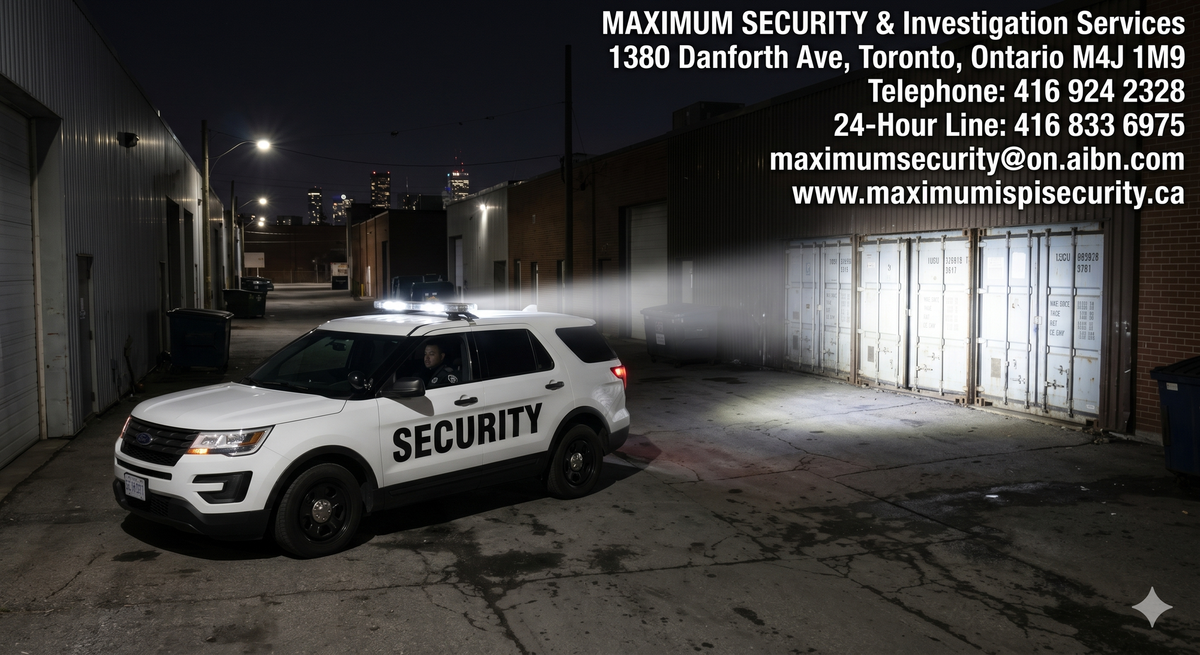
Managing a massive industrial warehouse, manufacturing plant, or logistics hub across Scarborough—stretching through the heavy industrial corridors of Birchmount and Warden, the bustling transport routes near Kennedy Road, or the sprawling distribution centers along Morningside and Sheppard—demands a specialized approach to commercial asset protection. Scarborough hosts one of the most critical logistical ecosystems in the Greater Toronto Area. However, the exact factors that make these industrial parks so efficient for commercial shipping—immediate access to the 401, wide arterial service roads, and massive, isolated parking lots—also make them exceptionally vulnerable when the primary workforce goes home.
During the overnight hours and extended weekend windows, these sprawling commercial properties become highly attractive targets for organized cargo theft, catalytic converter stripping syndicates, illegal dumping, and aggressive trespassing. An industrial warehouse frequently spans hundreds of thousands of square feet, meaning a breach at a rear loading dock can go entirely unnoticed by standard interior alarm sensors until hours later. For corporate facility managers, warehouse owners, and logistics directors, relying on a basic chain-link fence and unmonitored exterior cameras is a catastrophic miscalculation. Protecting your commercial supply chain requires the implementation of dedicated, highly visible after-hours commercial property patrols. Deploying randomized, heavily documented mobile perimeter checks completely disrupts the planning of organized theft rings, satisfies strict commercial insurance mandates, and ensures your heavy industrial assets remain perfectly secure.
The Operational Vulnerability of Scarborough's Industrial Zones
Scarborough’s industrial landscape is vastly different from a standard downtown office tower. Manufacturing plants and commercial warehouses are frequently surrounded by dark, low-traffic service roads and feature massive, open transport yards. Organized cargo thieves and property criminals specifically target these zones because the sheer size of the properties provides massive physical cover, allowing them to utilize heavy mechanical tools to defeat locks or strip vehicles without generating noise complaints from residential neighbors.
Consensus Analysis: Static Guard Huts vs. Randomized Perimeter Patrols
When industrial facility managers review their annual physical security budgets, they must decide between manning a permanent front gate house or utilizing a randomized mobile vehicle patrol service.
The Verdict:
- Avoid This: Relying on a single static guard sitting inside a front gate house for a massive, multi-acre property. While a gate guard is excellent for daytime access control and logging transport trucks, they are highly ineffective for massive properties at night. If a single guard is stationed at the front gate, they have zero visibility of the rear shipping lane located a quarter-mile away. Organized thieves simply park on a rear side street, cut through the back fence line, and execute their theft while the static guard remains isolated at the front entrance.
- Buy This: Implement a dedicated, randomized mobile security patrol. A marked security vehicle possesses the mobility to rapidly cover massive industrial acreage. The patrol officer executes completely unpredictable sweeps of the entire perimeter, driving through the transport yards, illuminating the rear loading docks, and checking remote fence lines. This high-visibility, dynamic movement forces criminal scout teams to abandon the target, as they cannot accurately predict when the patrol vehicle will suddenly round the corner of the warehouse.
Deep Dive: Calculating the True Overhead of Industrial Property Breaches
The economic fallout of a late-night perimeter breach at a Scarborough manufacturing facility extends exponentially past the direct cost of a stolen skid of merchandise. Organized cargo theft is a multi-million-dollar industry in the GTA. If an organized crew breaches a rear fence, accesses an overnight transport trailer, and steals a load of high-value electronics, pharmaceuticals, or raw manufacturing materials, the facility faces a catastrophic supply chain failure.
Furthermore, a massive hidden cost for industrial owners is the targeted vandalism of heavy commercial fleets. Syndicates routinely infiltrate dark Scarborough transport yards overnight specifically to steal catalytic converters from box trucks or siphon thousands of liters of diesel fuel from heavy excavators. If your commercial transport fleet is disabled overnight, your entire morning shipping manifest is destroyed. You will face heavy financial penalties from your corporate clients for missed delivery windows, and your commercial insurance broker will likely increase your annual premiums or mandate expensive structural upgrades before renewing your policy.
| Industrial Loss Component | Unsecured Scarborough Warehouse | Fortified Mobile Patrol Layout |
| Cargo Theft / Trailer Breach (Per Incident) | $50,000 - $250,000+ (CAD) | $0.00 (Breach Deterred) |
| Commercial Fleet Vandalism (Parts/Fuel) | $8,000 - $15,000 (CAD) | $0.00 (Maintained Fleet Integrity) |
| Lost Logistics Revenue / Client Penalties | $10,000+ (CAD in missed SLAs) | $0.00 (Uninterrupted Supply Chain) |
| Commercial Insurance Premium Escalations | 20% - 40% Annual Increase | $0.00 (Maintained Clean Record) |
| Total Estimated Financial Impact | $68,000 - $275,000+ (CAD) | $0.00 |
By deploying a professional mobile security presence, facility managers transform their massive, vulnerable acreage into a tightly audited, highly secure compound. This operational investment is mathematically superior to absorbing the devastating, compounding losses generated by an unprotected industrial perimeter. Facility directors looking to understand how these exterior security principles scale across different commercial environments should review our foundational manual on commercial building security inspections and mobile patrol checklists to verify baseline risk management workflows.
Engineering an Ironclad Industrial Perimeter Defense
Eliminating cargo theft and commercial trespassing in Scarborough's industrial sectors requires a strategic, procedural layout that aggressively targets the exterior boundaries of the property.
1. The High-Intensity Vehicle Sweep
The most critical component of an after-hours property patrol is the high-intensity vehicle sweep. The mobile patrol officer does not simply drive past the front of the building; they execute a deliberate, tactical route around the entire physical perimeter of the warehouse.
The officer operates a marked security vehicle equipped with roof-mounted amber warning lights and heavy-duty, directional alley spotlights. As they navigate the rear shipping lanes and transport yards, they utilize these high-intensity lights to aggressively illuminate the dark spaces between parked trailers, deep shipping bays, and garbage enclosures. This overwhelming visual dominance immediately flushes out trespassers, loiterers, or scout teams attempting to hide in the shadows, neutralizing their primary operational advantage. For commercial operators looking to adapt these concepts for smaller properties, incorporating the protocols in our guide on lock-up and unlock mobile security patrols on Danforth Ave provides excellent context for storefront protection.
2. Manual Verification of High-Risk Access Points
Visual confirmation from inside a vehicle is never sufficient for securing an industrial property. The patrol officer must physically exit the vehicle to conduct manual "door pull" tests on critical infrastructure.
The officer must walk up to every ground-level access door, rear fire exit, and overhead shipping bay to manually verify that the heavy deadbolts and exterior padlocks are fully engaged. Furthermore, the officer must physically inspect the primary perimeter chain-link fence, looking specifically for sections where the wire has been cleanly cut and temporarily folded back—a common tactic used by organized cargo thieves who prepare a breach point days before actually executing the theft. By discovering and reporting these compromised fence sections immediately, the facility manager can execute emergency repairs before the actual theft occurs.
3. Transport Fleet and Idling Vehicle Audits
Massive transport yards in Scarborough frequently attract unauthorized commercial vehicles. Independent truck drivers looking to avoid paid overnight parking fees will frequently pull into dark, unmonitored industrial lots to sleep in their cabs. While often non-malicious, unauthorized heavy vehicles introduce massive liability risks and complicate morning shipping logistics.
During the mobile patrol, the officer logs the license plates and corporate markings of all vehicles parked on the property. If they discover an unauthorized idling transport truck, they utilize the Trespass to Property Act to approach the cab safely, wake the driver, and issue a formal command to vacate the private property immediately, ensuring your shipping lanes are completely clear for your morning logistics staff.
Commercial Procurement: Sourcing Industrial Security in East Toronto
Acquiring professional mobile patrol coverage for a massive industrial facility requires a realistic understanding of commercial agency pricing structures. Corporate logistics managers cannot evaluate security proposals based on basic minimum-wage expectations. A legitimate, compliant security agency must operate under the strict guidelines of the Private Security and Investigative Services Act (PSISA), pricing contracts to cover massive corporate infrastructure, including multi-million-dollar commercial general liability insurance, comprehensive WSIB clearings, and the heavy fuel and maintenance costs associated with running a 24/7 patrol fleet across Scarborough.
For active commercial warehouses, manufacturing plants, and logistics hubs, procurement teams should budget for the following agency bill rates:
- Standard Perimeter Mobile Patrol Check: Billed at $45.00 to $65.00 per individual site visit (CAD). This involves a thorough, documented sweep of the exterior transport yards, high-intensity illumination of all loading docks, physical door pulls on perimeter access points, and a detailed digital timestamp report.
- Comprehensive Interior/Exterior Industrial Audit: Billed at $60.00 to $85.00 per individual site visit (CAD). This involves the officer utilizing retained grand-master keys to enter the massive warehouse, execute a full interior sweep of the factory floor, check remote electrical rooms, verify fire panels, and lock down the exterior gates.
- Dedicated Alarm Response Call-Out: Billed at $65.00 to $95.00 per incident (CAD). This is a rapid emergency dispatch triggered by the warehouse burglar alarm in the middle of the night, ensuring a trained professional arrives to verify the threat and coordinate with the Toronto Police Service.
Hiring an organization that quotes rates significantly below these commercial baselines—such as offering an industrial patrol check for $20.00—is a direct indication that the provider is cutting critical compliance corners. If you hire a cut-rate, unverified security company and their patrol driver causes an accident in your transport yard or fails to carry proper commercial liability insurance, your corporate real estate group will bear 100% of the devastating legal liability. To understand how to properly vet B2B vendors, reviewing our corporate guide on hiring uniformed security guards for retail plazas in Brampton is an essential step for any operations director.
If your Scarborough warehouse, manufacturing facility, or heavy-duty logistics hub requires an unyielding line of defense to eliminate after-hours cargo theft, establishing professional protection is straightforward. Facility directors can easily connect with verified B2B vendors to request a custom security quote from Maximum PI Security to deploy certified mobile personnel, secure massive transport yards, and protect valuable commercial assets against organized overnight threats.
Legal Compliance and Commercial Insurance Requirements
Deploying a professional mobile patrol service provides massive legal liability protection and directly satisfies the strict requirements of commercial property insurance underwriters.
Many modern commercial industrial insurance policies contain strict "Protective Safeguard Endorsements" or "Vacancy Clauses." These highly specific legal clauses dictate that if a massive commercial warehouse is left unoccupied after hours, the property must be physically inspected by a licensed professional at regular intervals, or the alarm system must be tied to a verified private guard response service.
If a facility manager relies entirely on unmonitored cameras, and the warehouse suffers a massive loss—such as a devastating, undetected electrical fire or a multi-million-dollar cargo theft—the commercial insurance carrier will execute a rigorous forensic audit. If the carrier discovers that the mandatory physical security patrols were not being executed, they will instantly void the policy and deny the massive payout, leaving the corporate logistics group completely financially responsible for the loss. By utilizing a licensed security agency equipped with digital NFC scanning technology and timestamped GPS reporting, the facility manager possesses absolute, undeniable proof of compliance to hand directly to insurance auditors.
Nitty-Gritty Industrial Security Realities
How do I know the patrol officer didn't just drive past the front gate without checking the rear loading docks?
Elite commercial security agencies eliminate this risk entirely by utilizing advanced digital reporting software. The agency will install weatherproof Near Field Communication (NFC) checkpoints or QR code tags at critical, remote locations across your massive property—such as the furthest rear shipping door, the main electrical utility box, and the rear fire exit. During their patrol, the officer is forced to exit their vehicle, walk to the remote tag, and physically scan it with a GPS-tracked smartphone. This generates an unalterable digital timestamp proving they physically walked the entire property, which is emailed to you every morning.
What should the patrol officer do if they discover a hole cut in the perimeter fence during the night?
If a mobile patrol officer discovers a compromised fence line, their strict protocol dictates that they assume a breach is currently in progress. The officer will not blindly walk through the hole into the dark transport yard alone. They will instantly secure the immediate exterior perimeter, notify their centralized dispatch desk to coordinate backup, and execute a tactical, high-intensity spotlight sweep from a safe distance. If suspects are spotted, they will immediately dispatch the Toronto Police Service. Once the property is verified safe, they will document the damage with high-resolution photos, apply a temporary physical barrier (like heavy-duty zip ties or temporary fencing) if possible, and send an immediate high-priority alert to the facility manager for morning repairs.
Can a mobile guard physically detain teenagers caught trespassing on the roof of the warehouse?
Under the Ontario Trespass to Property Act, a licensed security guard acts as an official representative of the property owner and possesses the legal authority to execute an arrest for trespassing. However, professional commercial security agencies strictly limit physical "hands-on" arrests in highly dangerous environments, such as a commercial roof. Attempting to physically wrestle a teenager on a roof introduces massive, catastrophic physical danger and corporate liability. The standard protocol is absolute containment: the officer will illuminate the subjects, issue a clear verbal command that police are en route, secure the ground-level access ladders so the individuals cannot escape easily, and coordinate a safe, formal removal by the local police division.
Jeff Calixte is an online exclusive content sell strategist with a deep background in tracking local asset protection data, analyzing Southern Ontario labor rates, and outlining real operational deployment structures across the Greater Toronto Area.

Frequently Asked Questions
How many mobile patrol checks should I schedule for my Scarborough warehouse each night?
For a standard, large-scale commercial warehouse operating a standard 9-to-5 schedule, scheduling three to four randomized mobile checks per night is the industry best practice. This configuration ensures that your massive property is physically audited every two to three hours throughout the high-risk overnight window, making it exceptionally difficult for organized cargo theft operations to predict or execute a successful breach.
Can the mobile patrol officer check the temperature gauges on my commercial freezers?
Yes. Many specialized logistics hubs (such as cold-storage food processing plants or pharmaceutical warehouses) require strict environmental monitoring. You can authorize your mobile patrol officer to execute interior sweeps specifically to verify the digital readouts on critical commercial freezers or boilers. If the temperature falls outside the acceptable corporate parameters, the officer will immediately trigger your emergency maintenance contact matrix, saving hundreds of thousands of dollars in spoiled inventory.
Are mobile patrol vehicles legally permitted to use flashing lights on private industrial property?
Under the Ontario Highway Traffic Act, private security vehicles executing mobile patrol, property inspection, and alarm response duties are legally permitted to operate amber-colored flashing warning lights while on private commercial property or when parked safely along public service roads adjacent to a client's facility. These flashing warning lights serve as an essential, high-visibility visual deterrent against organized cargo thieves.
About the Author
Jeff Calixte is an online exclusive content sell strategist with a deep background in tracking local asset protection data, analyzing Southern Ontario labor rates, and outlining real operational deployment structures across the Greater Toronto Area.
Sources
- Ontario Ministry of the Solicitor General - Private Security and Investigative Services Act Regulations
- Trespass to Property Act, R.S.O. 1990, c. T.21
- Toronto Police Service - Commercial Property Protection and Cargo Theft Initiatives
Note
Commercial bill rates, guard wages, deployment conditions, and vendor availability can vary widely by province, municipality, season, and project scope. All pricing estimates, labor figures, and career examples in this guide are approximations based on current Ontario market data. Always confirm contract details, licensing compliance, and specific rate quotes directly with your chosen service provider or employer before finalizing any agreements.